
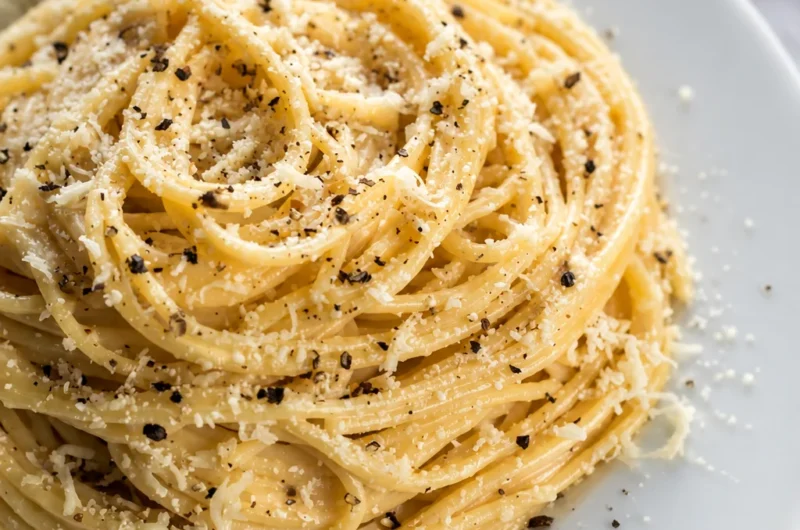
cacio e pepe recipe nights usually happen at my place when I am tired, hungry, and this close to ordering takeout. You know the feeling, you want something comforting, but you also do not want a sink full of dishes. This is the pasta I make when I need dinner to feel special without actually being complicated. It is simple, fast, and somehow still tastes like a tiny restaurant moment at home. If you have pasta, pepper, cheese, and a little patience, you are set. 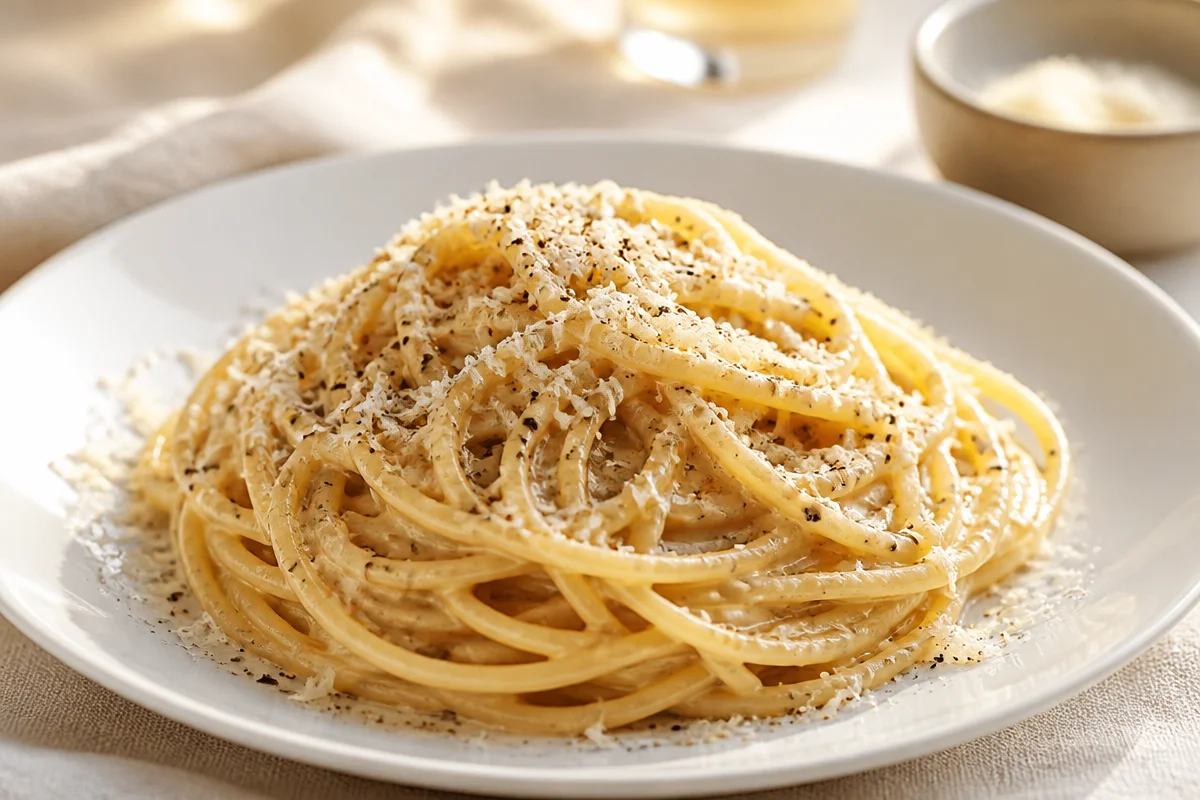
What is Cacio e Pepe?
Cacio e pepe is a classic Roman pasta that proves a point I love: you do not need a long ingredient list to get big flavor. The name literally tells you what is going on. “Cacio” is cheese (usually Pecorino Romano) and “pepe” is black pepper.
The magic is in the sauce, even though there is no cream involved. The sauce comes from a mix of starchy pasta water and finely grated cheese, plus a bold amount of freshly cracked pepper. When it goes right, it turns glossy and coats the noodles in a way that feels rich but not heavy.
I also like that it is a real pantry dinner. It is not fussy, but it does require attention for just a couple minutes. This is not the kind of pasta you dump and walk away from. Think of it as low effort, but hands on for a short time, which honestly is my favorite type of cooking.
One more thing: if you are curious who is behind this blog and why I keep obsessing over Italian comfort food, you can peek at my little corner of the internet here: about the author. 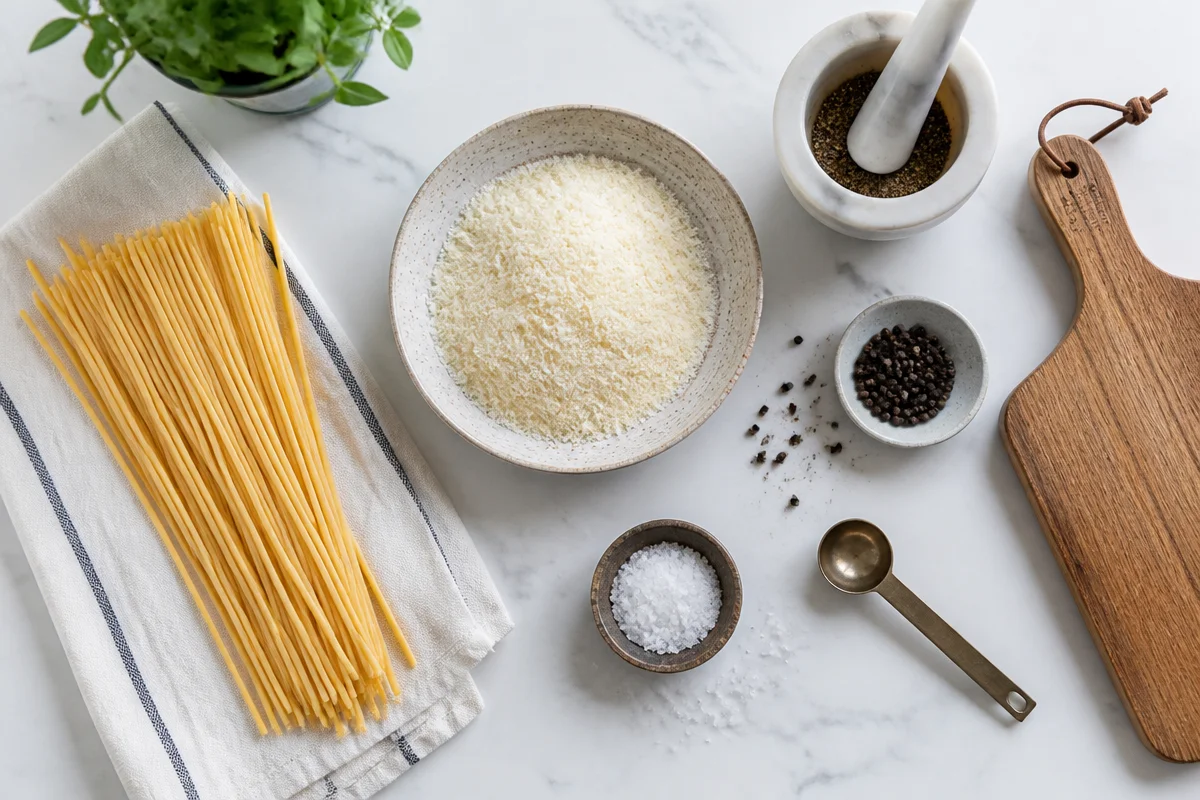
How to Make Cacio e Pepe
Before we jump in, here is a little practical table I keep in mind so I do not overthink it.
Ingredients and what you will need
- Spaghetti (or tonnarelli if you can find it)
- Pecorino Romano, finely grated (Parmesan can work but Pecorino is the classic)
- Freshly cracked black pepper (do not use old dusty pepper if you can help it)
- Salt for the pasta water
- A large pot, a skillet or wide pan, tongs, and a cup or mug to save pasta water
Step by step directions (the simple way)
1) Start the pasta water. Bring a pot of water to a boil and salt it. Not ocean salty, but properly seasoned. Drop in your spaghetti.
2) While the pasta cooks, toast your pepper. Put a dry skillet on medium heat and add a generous amount of black pepper. Let it warm for about 30 seconds to 1 minute, just until it smells super fragrant. This tiny step makes the whole bowl taste more alive.
3) Save pasta water. Right before the pasta is done, scoop out about 1 to 1.5 cups of pasta water. This is the ingredient that makes the sauce happen.
4) Move pasta to the skillet. When the spaghetti is just about al dente, use tongs to move it into the skillet with the pepper. Add a splash of pasta water and toss.
5) Make the cheese mixture. This is the part where people sometimes struggle, so I do it gently. Turn the heat to low or even off for a moment. Add a small splash of pasta water to a bowl and stir in the grated Pecorino Romano to make a thick paste. Then add that paste to the pasta and toss like your life depends on it. Add tiny splashes of warm pasta water as needed until it turns creamy and coats the noodles.
6) Taste and adjust. It should taste peppery, salty from the cheese, and rich in a clean way. Add more pepper if you love that punch. Serve immediately because this pasta waits for nobody.
I made this cacio e pepe recipe for a friend who “does not cook” and she actually texted me later saying she felt like a genius. I will take that win.
“I tried this after a long workday and it was the first time my pasta sauce turned out creamy without using cream. The pepper flavor was unreal.”
Quick side note, because I always like being transparent online: if you ever wonder how sites handle privacy stuff when you browse recipes, here is the page for this site: GDPR compliance info.
Cacio e Pepe Variations
I am a big believer in learning the classic first, then playing around. Once you nail the base, you can still keep the spirit of the dish while adjusting it to your kitchen.
Here are a few easy variations I actually make:
1) Different pasta shapes
Spaghetti is great, but bucatini is fun and chewy. Rigatoni can work too, though you may need a bit more tossing to get the sauce into all the ridges.
2) Mix cheeses (carefully)
If Pecorino feels too sharp for you, try doing mostly Pecorino with a small handful of Parmesan. Do not go full Parmesan if you want the classic flavor.
3) Add a little lemon zest
This is not traditional, but a tiny pinch of zest brightens everything and makes it feel lighter. Just a tiny pinch though.
4) Add protein on the side
If you want something more filling, serve it with simple roasted chicken or a fried egg. I know, not Roman, but it works on a busy night.
No matter what twist you try, the main goal is the same: a silky sauce that comes from cheese plus starchy water, not from heavy extras. And yes, this still counts as a cacio e pepe recipe in my book if you keep the core idea intact.
Tips and Tricks for Cacio e Pepe Success
This dish is famous for being simple but also a little dramatic if you rush it. If your cheese clumps or the sauce goes weird, do not panic. It happens, and it is fixable.
How to avoid clumps and get that creamy sauce
Use finely grated cheese. I mean very fine. The fluffy snow kind, not thick shreds. Thick shreds melt poorly and turn into little cheese worms.
Do not add cheese over high heat. If the pan is screaming hot, the cheese can seize and get grainy. Lower the heat or turn it off for a moment, then toss like crazy.
Use warm pasta water, not cold. Cold water shocks the sauce. Warm starchy water helps everything come together.
Toss, do not stir. Use tongs and keep the pasta moving. You are basically emulsifying the sauce by force and friction.
Salt carefully. Pecorino is salty. You still salt the pasta water, but taste before you add any extra salt at the end.
If the sauce gets too thick, add a splash of pasta water and keep tossing. If it is too thin, keep tossing on low heat for a few seconds and it will tighten up. This is one of those dishes where you learn by doing. After you make this cacio e pepe recipe a couple times, your hands will just know what to do.
The Story of Cacio e Pepe
I love dishes with a little history, especially when the history feels like real life. Cacio e pepe is tied to Rome and to shepherd food. The ingredients make sense for travel and long days: dried pasta, aged cheese, black pepper. All sturdy, all packed with flavor, and none of it needs fancy storage.
Over time, it became a Roman staple. It is the kind of dish locals argue about, like how much pepper is correct and whether you should mix the cheese in a bowl first or right in the pan. I have seen both methods work, but I swear the bowl paste method is friendlier for home kitchens.
For me, the story is also personal now. The first time I tried making it, I ended up with clumpy cheese and pepper water. I still ate it because pasta is pasta, but I was annoyed. The next time I slowed down and treated the sauce like a small project, and suddenly it clicked. Now I make this cacio e pepe recipe when I want comfort that feels earned.
Common Questions
Can I use Parmesan instead of Pecorino Romano?
Yes, but it will taste milder and less sharp. If you can, do mostly Pecorino and a little Parmesan, rather than replacing it completely.
Why did my cheese clump up?
Usually the pan was too hot, or the cheese was grated too thick. Turn off the heat, add a splash of warm pasta water, and toss hard. Next time, grate finer and lower the heat before adding cheese.
Do I really need to toast the pepper?
You do not have to, but it makes a difference. Toasting wakes up the pepper and gives the pasta that deep, warm bite.
What pasta works best?
Spaghetti is the easiest and most common. Bucatini is great if you want extra chew. Tonnarelli is very traditional if you can find it.
Can I reheat leftovers?
You can, but it is best fresh. If you reheat it, add a small splash of water and warm it gently, then toss. The sauce will not be quite as silky, but it will still be tasty.
Your next cozy dinner plan
If you take one thing from this post, let it be this: the best cacio e pepe recipe is the one you make with good pepper, finely grated cheese, and a calm minute of tossing. Keep the heat low when the cheese goes in, save that pasta water, and do not be shy with the pepper. If you want to compare methods, I like reading thoughtful recipe breakdowns like Cacio e Pepe (Spaghetti With Black Pepper and Pecorino Romano), and for a super straightforward version you can also check Easy Cacio e Pepe Recipe – only 4 ingredients! | Spoon Fork Bacon. Tonight, grab a box of spaghetti and go for it. You might surprise yourself.
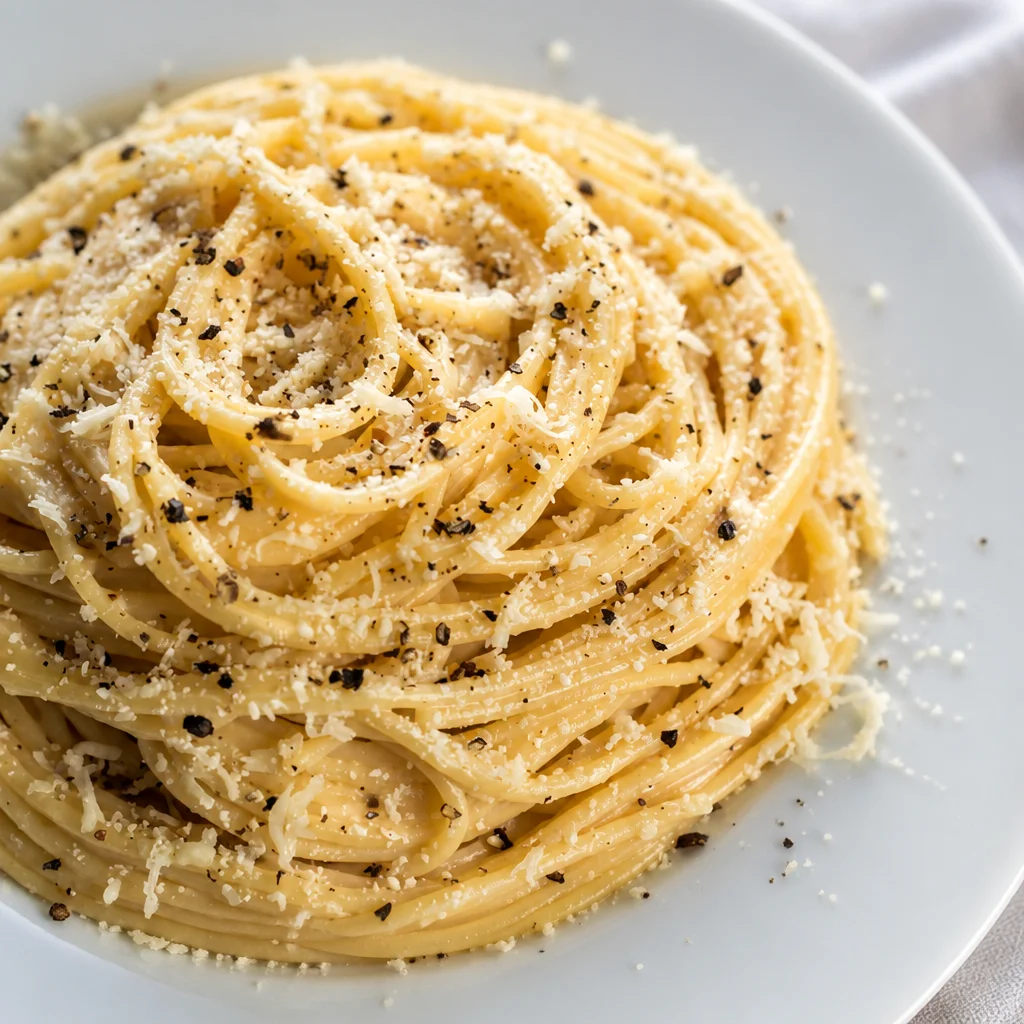
Cacio e Pepe
Ingredients
Method
- Bring a pot of water to a boil and salt it. Drop in your spaghetti.
- In a dry skillet over medium heat, add a generous amount of black pepper and toast for 30 seconds to 1 minute, until fragrant.
- Save about 1 to 1.5 cups of pasta water right before the pasta is done.
- When the spaghetti is nearly cooked, move it into the skillet with the toasted pepper, adding a splash of pasta water.
- In a separate bowl, combine the pasta water with the grated Pecorino Romano to create a thick paste, then add this paste to the pasta, tossing vigorously.
- Add additional warm pasta water as needed to make the sauce creamy and coat the noodles.
- Taste the dish and adjust the seasoning with more pepper if desired. Serve immediately.


