
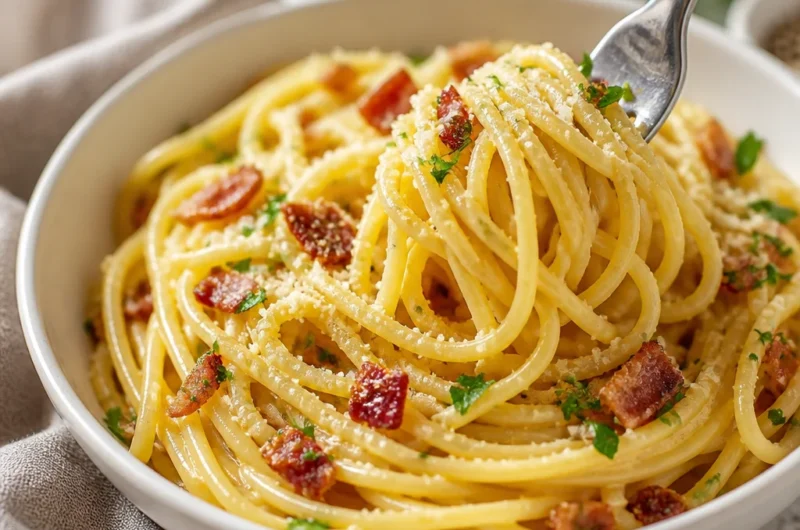
spaghetti carbonara recipe nights usually happen when I open the fridge, see a whole lot of nothing, and still want dinner to feel like a treat. You know the vibe, you are tired, hungry, and not in the mood to babysit a complicated sauce. Carbonara is my go to because it feels fancy, but it is honestly fast and very doable. It is the kind of pasta that makes people think you tried harder than you did. And if tonight is one of those nights, you are in the right place.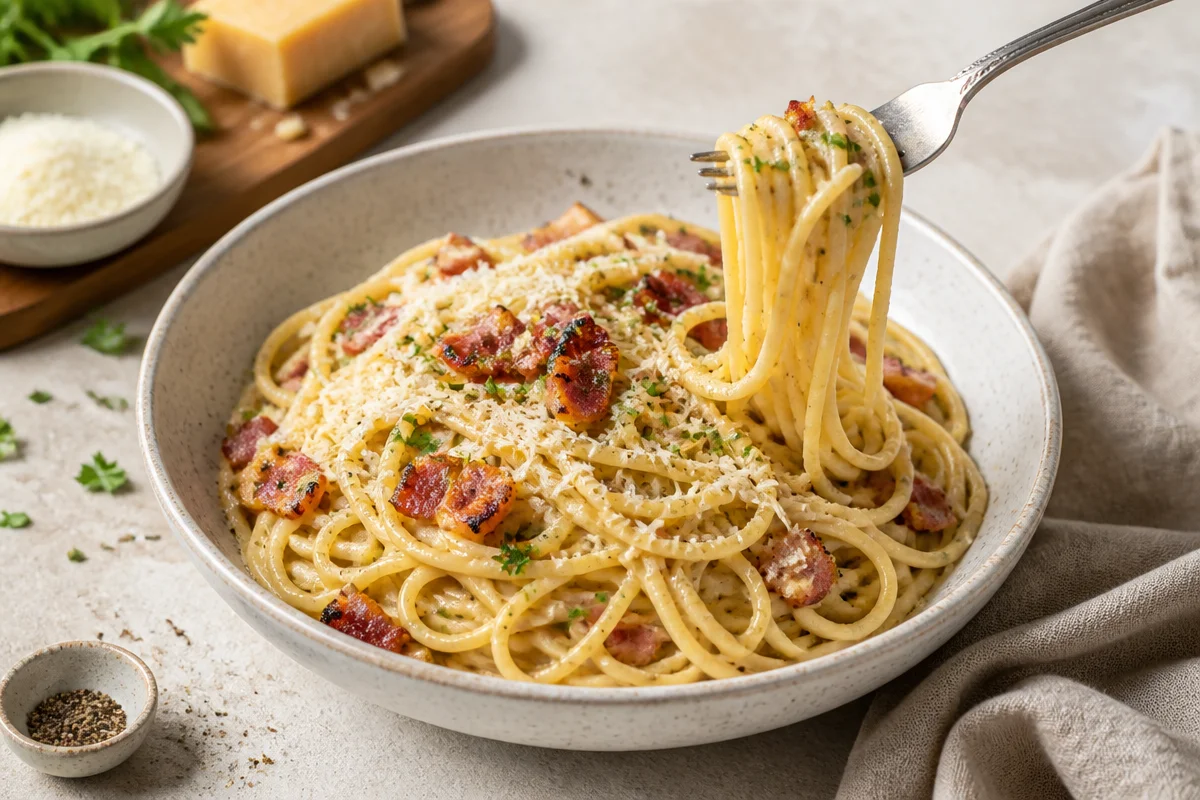
Why You’ll Love It
This is one of those dinners that checks all the boxes. It is quick, cozy, and it tastes like something you would order at a good Italian spot, except you are in socks, in your own kitchen.
Here is why I keep coming back to this spaghetti carbonara recipe (especially on weeknights):
- Fast: you can pull it off in about 20 to 30 minutes.
- No heavy cream needed: the sauce comes from eggs, cheese, and pasta water.
- Minimal ingredients: you probably have most of them already.
- Big comfort factor: salty pork, pepper, and that glossy sauce is just everything.
- Easy to scale: works for one hungry person or a whole table.
Also, it is a great “learn once, use forever” recipe. After you nail it one time, you can make it without thinking. If you are curious about who is behind these recipes and why I am so obsessed with simple Italian comfort food, you can peek at my little backstory on this About page.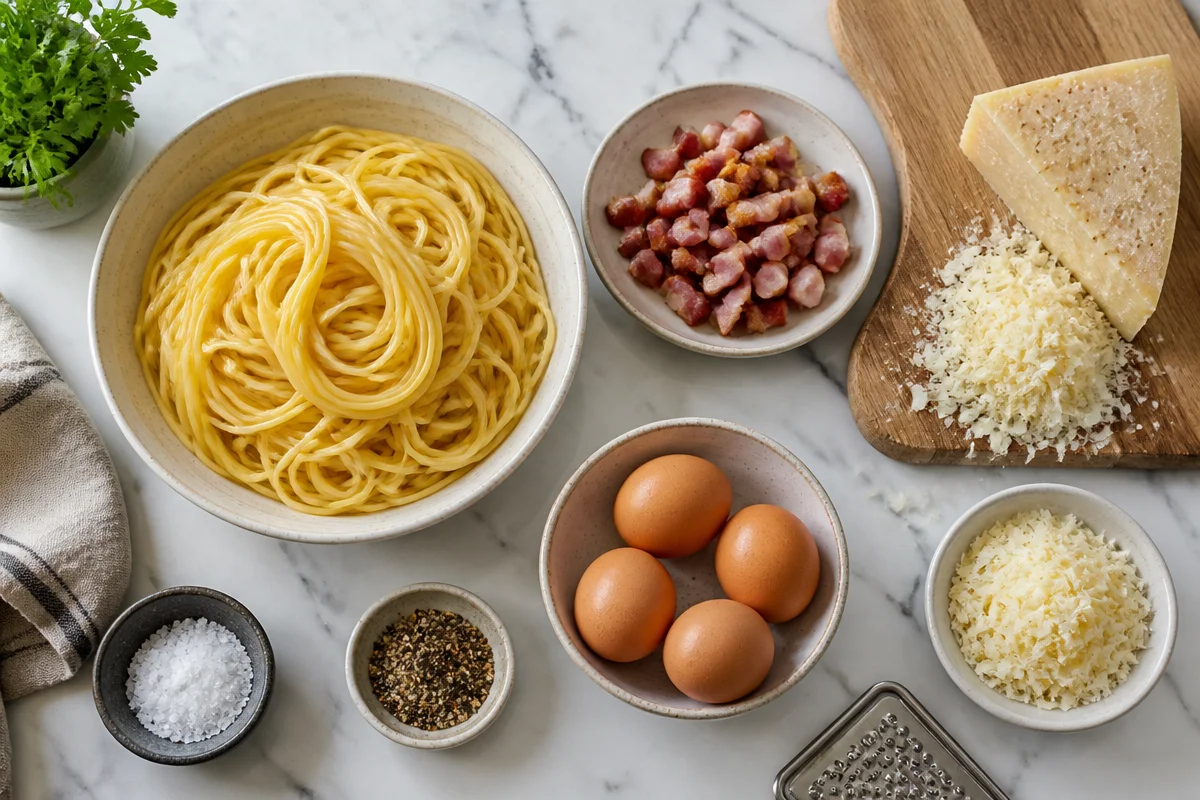
What Is Carbonara?
Carbonara is a classic Roman pasta dish. The magic is that it tastes creamy even though the sauce is not a cooked cream sauce. The heat from the pasta gently thickens the eggs and melts the cheese, and the pasta water helps it turn into a smooth, clingy sauce.
The traditional version uses guanciale, which is cured pork cheek. It is rich and slightly funky in the best way. A lot of home cooks use pancetta, and honestly, plenty of people use bacon. I have done all three depending on what I can find, and dinner has never been sad.
One thing that matters: carbonara is all about timing and heat control. You are not making scrambled eggs. You are making a silky sauce that coats each strand of spaghetti like it was meant to be there. When it hits right, it is one of the most satisfying bites of pasta ever.
“I always thought carbonara was complicated, but this method finally clicked for me. The sauce turned glossy, not scrambled, and my family asked for it again two days later.”
Key Ingredients in Carbonara
You do not need a giant shopping list for this. You just need the right basics and a little confidence. Here is what I use for my spaghetti carbonara recipe, plus a few practical notes so you can shop smart.
Spaghetti: Classic for a reason. Any long pasta works, but spaghetti is the easiest to toss and coat evenly.
Eggs: I like using whole eggs plus an extra yolk or two for richness. Yolks make the sauce feel luxurious.
Cheese: Pecorino Romano is traditional and gives that salty bite. Parmesan works too, or do a half and half mix. Whatever you do, grate it yourself if you can. The pre shredded stuff does not melt as smoothly.
Guanciale or pancetta or bacon: Use what you can find. Guanciale is the most classic, pancetta is a close second, and bacon is the easiest. Just know bacon can be smokier, so the flavor will lean a bit different.
Black pepper: Carbonara wants a lot of it. Fresh cracked tastes best. This is not the moment for dusty pepper that has been sitting open in a drawer.
Salt: Mostly for the pasta water. The pork and cheese are salty already, so go easy at the end.
And here is the tiny thing people forget: pasta water. That starchy water is your sauce helper. It loosens, smooths, and brings everything together.
;
If you have questions on ingredient swaps, or you made it and want to tell me how it went (or ask what went wrong), I am always happy to chat. You can reach me through my contact page here.
How to Make Carbonara
This is where it all comes together. Read through once before you start, because carbonara moves fast right at the end. You want everything ready so you are not frantically grating cheese while your pasta overcooks.
Step by step, my weeknight method
1) Boil the pasta. Get a big pot of water going. Salt it so it tastes like the sea. Add spaghetti and cook until just al dente. Before you drain, scoop out about 1 to 2 cups of pasta water and set it aside.
2) Cook the pork. While the pasta cooks, cut guanciale or pancetta (or bacon) into small pieces. Cook it in a large pan over medium heat until the fat renders and the pieces turn crisp. Turn off the heat when it looks perfect. You want the fat in the pan, do not drain it.
3) Mix the eggs and cheese. In a bowl, whisk together 2 whole eggs plus 1 or 2 extra yolks (depending on how rich you want it). Stir in a big handful of finely grated Pecorino Romano or Parmesan, plus lots of black pepper. The mixture will look thick and a little paste like. That is good.
4) Toss pasta with the pork. Add the drained spaghetti directly into the pan with the pork and the rendered fat. Toss so the noodles get coated and warm.
5) Make the sauce off the heat. This is the key moment. Make sure the pan is not on the burner. Pour in the egg and cheese mixture and toss quickly. Add a splash of reserved pasta water, a little at a time, tossing the whole time, until it becomes glossy and creamy.
6) Taste and finish. Add more black pepper. Taste for salt, but be careful because the cheese and pork bring a lot already. Serve right away while it is silky.
If you want a simple mental rule: the eggs should thicken from the heat of the pasta, not from direct stove heat. When in doubt, lift the pan off the burner and keep tossing.
Helpful Tips
Carbonara is simple, but the details matter. These tips come from me making this spaghetti carbonara recipe many times, including the messy learning phase where I accidentally made pasta with scrambled egg bits. It happens. You will still eat it. But let us avoid that if we can.
How to keep the sauce creamy, not scrambled
Turn off the heat before adding eggs. I know I already said it, but it is worth repeating. Residual heat is enough.
Toss fast. Keep the pasta moving so the eggs coat everything evenly instead of settling and cooking in one spot.
Use pasta water gradually. Add a splash, toss, and see what it looks like. The sauce should cling to the noodles, not pool at the bottom.
Easy fixes if something goes sideways
If it looks too thick: add more hot pasta water, a tablespoon at a time, and toss.
If it looks too thin: add a little more cheese and toss. Let it sit for 20 seconds and it will tighten up.
If the pasta cooled too much: you can gently warm the pan for just a few seconds, but keep it low and keep tossing. Think gentle, not blasting heat.
Serving idea: I love carbonara with a simple green salad and something crunchy like garlicky bread. Nothing fancy, just enough to balance the richness.
Common Questions
Can I use bacon instead of guanciale?
Yes. Bacon is smokier and sometimes saltier, but it still makes a delicious carbonara. If your bacon is very salty, go lighter on added salt elsewhere.
Do I really not need cream?
You do not need it. The creamy texture comes from eggs, cheese, and starchy pasta water. Cream can make it taste heavier and it can mute the sharp cheese flavor.
What if my eggs scramble?
It usually means the pan was too hot. Next time, take the pan off the burner for a minute before adding the egg mixture. If it happens, you can still save the meal by adding pasta water and tossing hard. It will not be perfect, but it will still taste good.
Can I reheat carbonara?
It is best fresh, but you can reheat gently. Add a tiny splash of water, then warm it on low heat while stirring constantly. Microwave reheating can turn it rubbery fast, so go slow if you do that.
How many eggs should I use for four servings?
I like 2 whole eggs plus 2 yolks for four servings. If you want it lighter, do 2 whole eggs plus 1 yolk. If you want it extra rich, add another yolk.
Dinner Is Handled Tonight
If you have been craving something cozy and fast, this spaghetti carbonara recipe is honestly one of the best tricks to have in your back pocket. Keep your ingredients simple, save that pasta water, and remember to mix the eggs in off the heat. Once you do it once, it feels way less intimidating and a lot more like second nature. And if you feel like comparing methods, I also like reading Carbonara – RecipeTin Eats and Spaghetti Carbonara Recipe (4 Ingredients, 30 Minutes) | The Kitchn because they both explain the timing in a really helpful way. Now go grab a fork, crack some pepper on top, and enjoy your night.
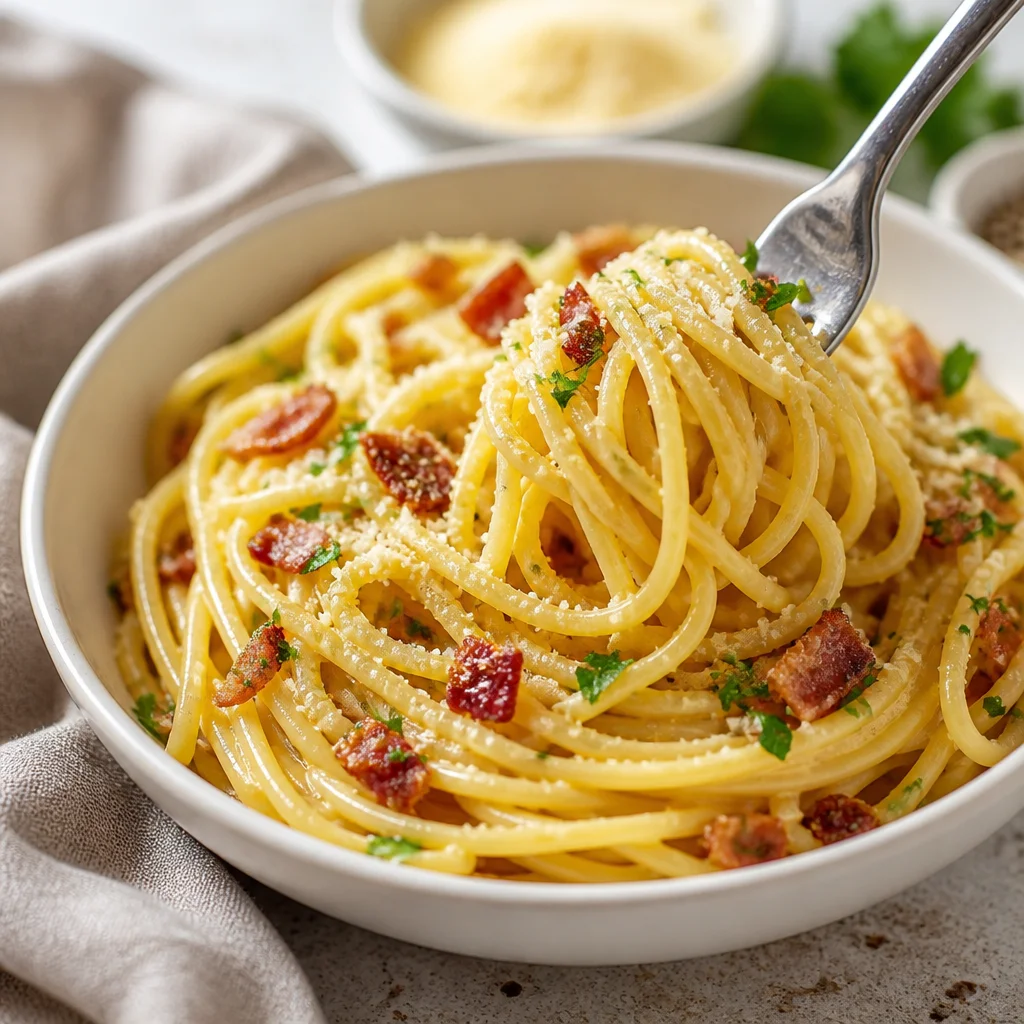
Spaghetti Carbonara
Ingredients
Method
- Boil a large pot of salted water and cook spaghetti until al dente. Reserve 1-2 cups of pasta water before draining.
- While pasta is cooking, cut guanciale or pancetta into small pieces and cook in a large pan over medium heat until crispy, keeping the rendered fat.
- In a bowl, whisk together whole eggs, egg yolks, grated cheese, and a generous amount of black pepper until thick and paste-like.
- Add drained spaghetti directly to the pan with the cooked meat and fat. Toss to coat the noodles.
- Turn off the heat and pour in the egg and cheese mixture, tossing quickly while adding reserved pasta water gradually until the sauce is glossy and creamy.
- Taste and adjust seasoning with more pepper or salt if needed. Serve immediately.


Pingback: Linguine Carbonara