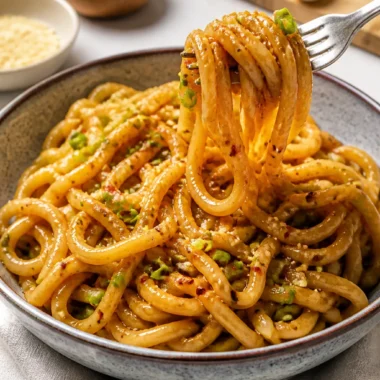
Gochujang Pasta Recipe
Using gochujang as a star ingredient transforms a simple pasta dish into a bold and flavorful experience. This creamy gochujang pasta delivers an adventure for your taste buds, merging the spicy, savory flavors of Korean cuisine with the comfort of Italian pasta. It’s a dish that’s quick to prepare and sure to impress, making it a go-to for busy weeknights. If you’re looking to spice things up, this recipe is the one you need! You may also find Creamy Baked Gochujang Korean Tofu useful.
Why This Recipe Works
- Quick prep
- Beginner-friendly
- One-pan cleanup
- Full of flavor
- Child-approved
- Versatile with ingredients
This creamy gochujang pasta combines pantry staples into a delicious meal that’s easy to whip up, ensuring you enjoy a satisfying dinner without fuss. You may also find Creamy Chicken Pasta With Sun Dried Tomatoes useful.

You may also find Pastafrola With Golden Crust useful.
Ingredients
- 8 oz spaghetti or pasta of choice
- 2 tablespoons gochujang
- 1 cup heavy cream
- 2 tablespoons olive oil
- 3 cloves garlic, minced
- Salt and pepper to taste
- Green onions for garnish
- Sesame seeds for garnish
Selecting high-quality ingredients makes a notable difference in this recipe, particularly the gochujang, which should be fresh and aromatic. For those with specific dietary needs, you can substitute gluten-free pasta, use coconut cream as a dairy-free option, or replace heavy cream with blended silken tofu for a lighter and vegan take.
Step-by-Step Directions
-
Cook the Pasta: Boil water in a large pot and add spaghetti, cooking it according to package instructions until it’s al dente. Drain and set the pasta aside. Be cautious not to overcook the pasta, as it may become mushy, which you want to avoid.
-
Sauté Garlic: In a large skillet, heat olive oil over medium heat. Add the minced garlic and sauté until fragrant, which should take about a minute. Keep a close eye on the garlic to prevent it from burning, as burnt garlic can impart a bitter flavor.
-
Add Gochujang: Stir in the gochujang and cook for an additional minute. This step will enhance the sauce’s flavor, creating a robust base. The aroma will become intensely appetizing, enticing your senses.
-
Incorporate Cream: Pour in the heavy cream and stir until well combined. Let it simmer for a few minutes, allowing the sauce to thicken slightly. It’s essential to maintain a gentle simmer to achieve the perfect creamy consistency without boiling over.
-
Mix in Pasta: Add the cooked pasta to the sauce and toss to coat well. This ensures that every piece of pasta is fully enveloped in the creamy sauce, maximizing flavor.
-
Season to Taste: Season with salt and pepper to taste. Adjust the seasoning according to your preference; adding a little more gochujang can amp up the heat and flavor profile.
-
Serve: Plate the pasta hot, garnished with chopped green onions and sesame seeds. This adds a fresh crunch and a pop of color, making the dish visually appealing.
Serving
Pair the gochujang pasta with a refreshing cucumber salad or some crusty bread to soak up any remaining sauce. Serving it at your next casual gathering will definitely impress your guests, making it a perfect weeknight meal or a cozy dinner with family. For an appealing presentation, use a fork to twirl the pasta into a nest on the plate for a restaurant-quality look.
Storage and Reheating
You can store any leftovers in an airtight container in the refrigerator for 3-4 days. For long-term storage, the dish can be frozen for up to 2 months. When reheating, gently warm on the stove over low heat, adding a splash more cream if the sauce has thickened too much during storage. This will help restore the delightful creaminess.
Common Mistakes
-
Flavor Technique: Make sure to sauté the garlic until it’s just fragrant, not burnt. This step is crucial for building a delicious foundation for your sauce.
-
Texture Trick: If your sauce gets too thick, simply add more cream or a splash of pasta water to loosen it up. The key is to find a balance in texture.
-
Most Common Mistake: Avoid overcooking the pasta, which can detract from the overall texture of the dish. Always cook it al dente for best results.
-
Ingredient Upgrade: Consider using homemade pasta for a truly gourmet twist. It elevates the dish and can be tailored to your liking.
-
Time-Saving Technique: To cut down prep time, use pre-minced garlic or jarred gochujang to streamline the cooking process without sacrificing flavor.
Variations
Spicy Version
To amp up the heat, increase the amount of gochujang used or add a sprinkle of red pepper flakes. This variation is for heat lovers who appreciate an extra kick.
Lighter and Healthier Version
Opt for whole wheat pasta and replace heavy cream with Greek yogurt for a lighter take. This keeps the dish creamy while packing in protein and reducing calories.
Vegetarian or Vegan Version
To make this dish vegan, substitute heavy cream with coconut cream and use a gluten-free pasta. This adaption still maintains a rich flavor without any animal products.
FAQ
Q: Can I make this dish ahead of time?
A: Yes, you can prepare the sauce in advance and store it in the refrigerator. Just cook the pasta fresh when you’re ready to serve.
Q: Why is my pasta too sticky?
A: If your pasta is sticking together, it may be due to insufficient stirring or not using enough water during boiling. Make sure to stir often and use a large pot with plenty of water.
Q: What’s the best substitute for gochujang?
A: If you don’t have gochujang, a combination of red pepper flakes mixed with soy sauce can work in a pinch, although the flavors will be different.
Q: How long does this pasta keep in the fridge?
A: This creamy gochujang pasta can be stored in the refrigerator for 3-4 days in an airtight container.
Q: Can I adjust the batch size?
A: Absolutely! Simply use the formula of ingredients based on the number of servings you desire.
Q: Do I need to rinse my pasta after cooking?
A: No, rinsing pasta can wash away the starch that helps sauce cling to it. Just drain and toss directly with your sauce for best results.
Conclusion
This creamy gochujang pasta is sure to become a favorite in your household, combining comforting flavors with an exciting twist. Enjoy this unique dish and consider exploring other delicious recipes like Gochujang Pasta – Aubrey’s Kitchen or check out the quirky culinary thoughts at Where’s Your Quiche At? – by Thea Everett. Don’t forget to save or pin this recipe for your next culinary adventure!

Gochujang Pasta
Ingredients
Method
- Boil water in a large pot and add spaghetti, cooking it according to package instructions until it’s al dente. Drain and set the pasta aside.
- In a large skillet, heat olive oil over medium heat. Add the minced garlic and sauté until fragrant, about one minute.
- Stir in the gochujang and cook for an additional minute.
- Pour in the heavy cream and stir until well combined. Let it simmer for a few minutes until the sauce thickens slightly.
- Add the cooked pasta to the sauce and toss to coat well.
- Season with salt and pepper to taste. Plate the pasta hot, garnished with chopped green onions and sesame seeds.